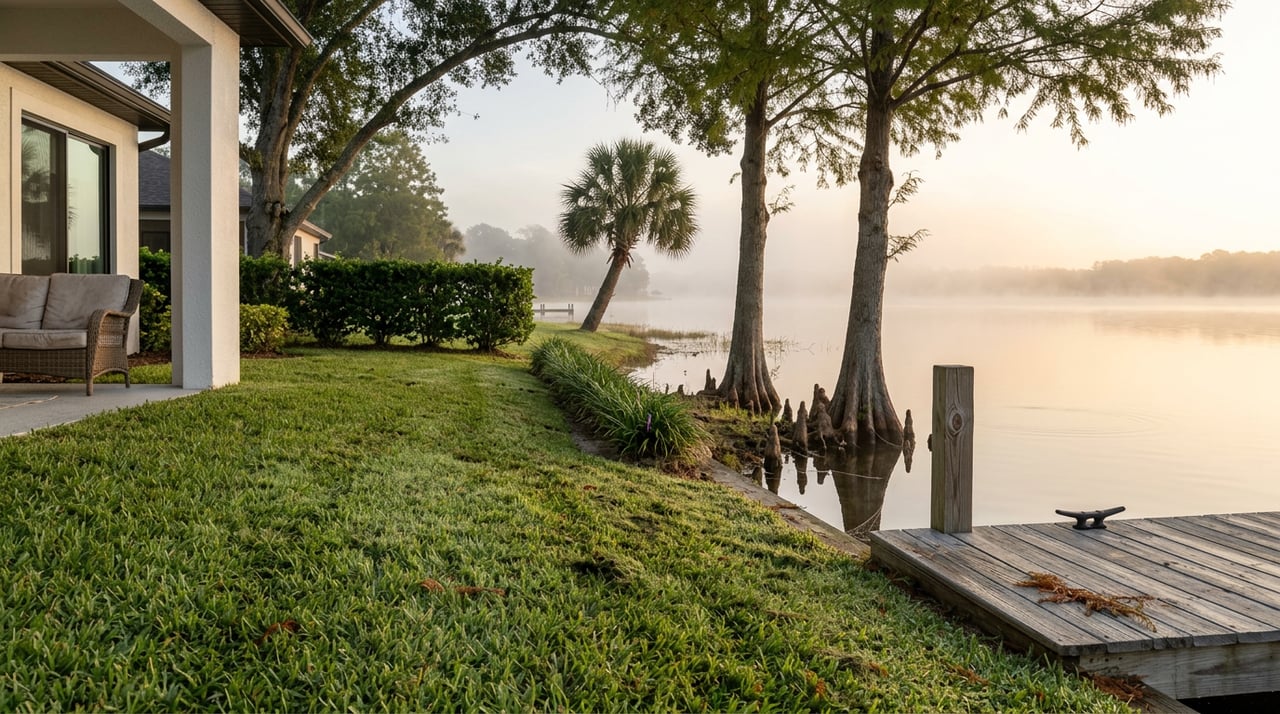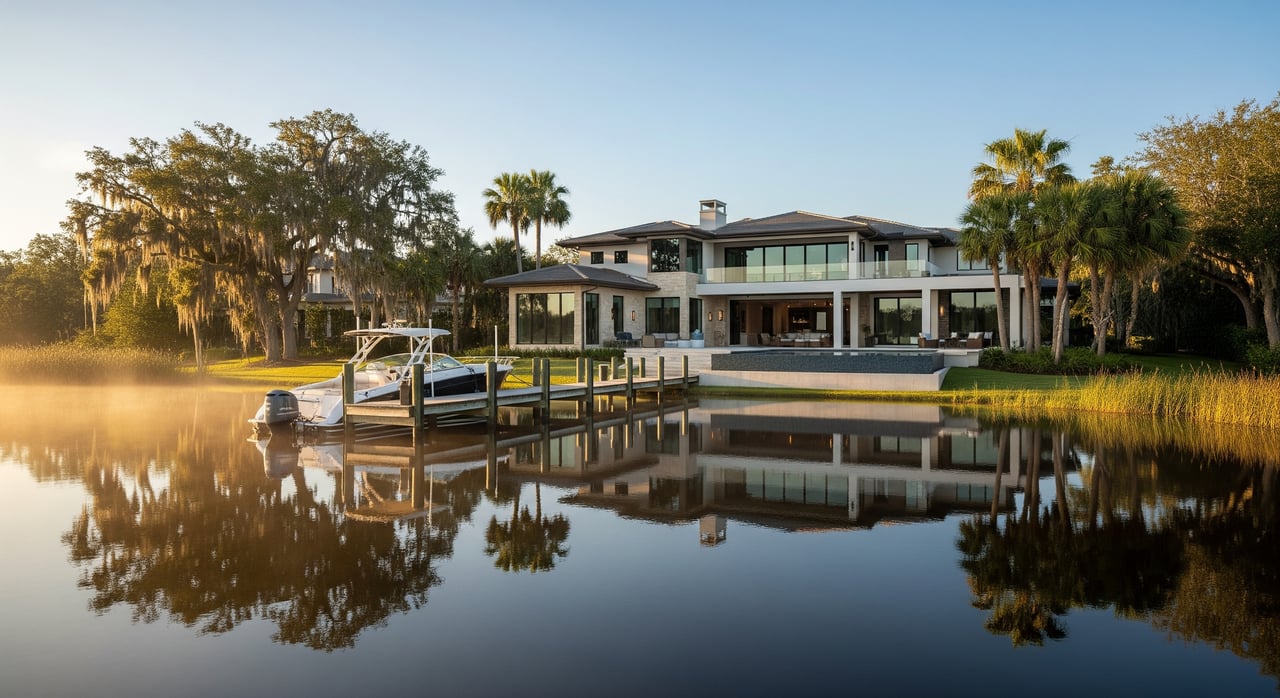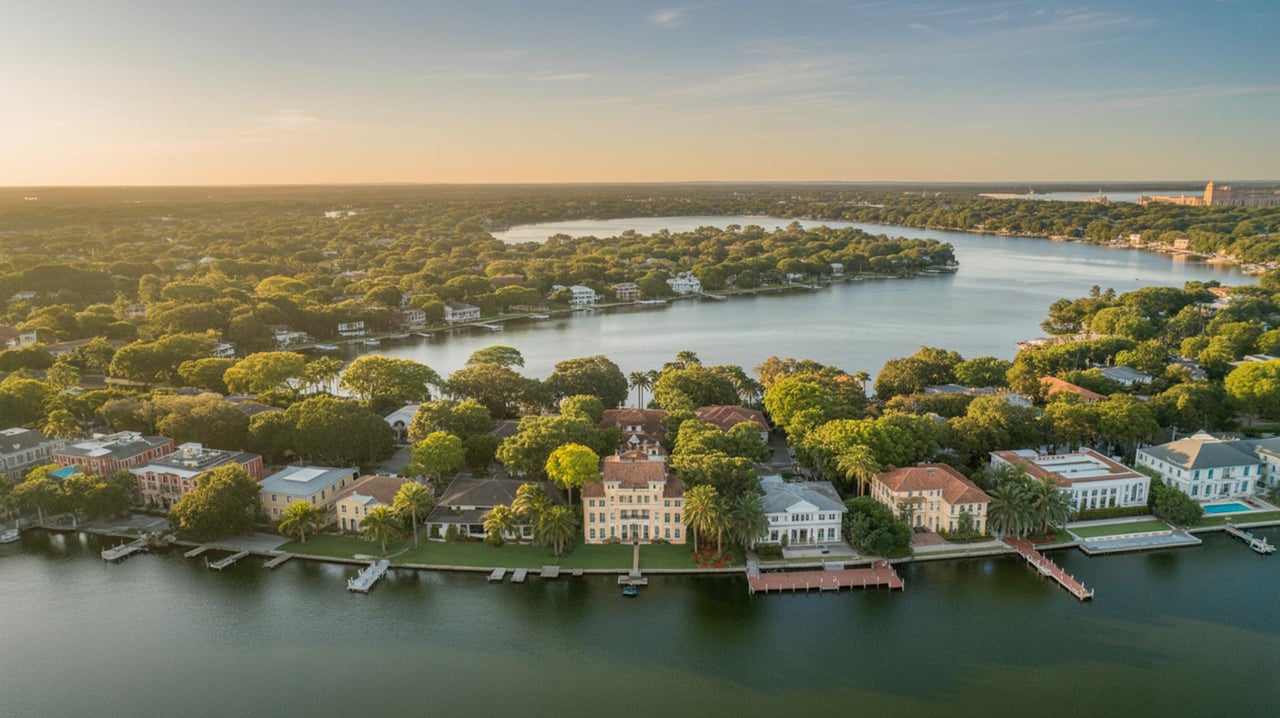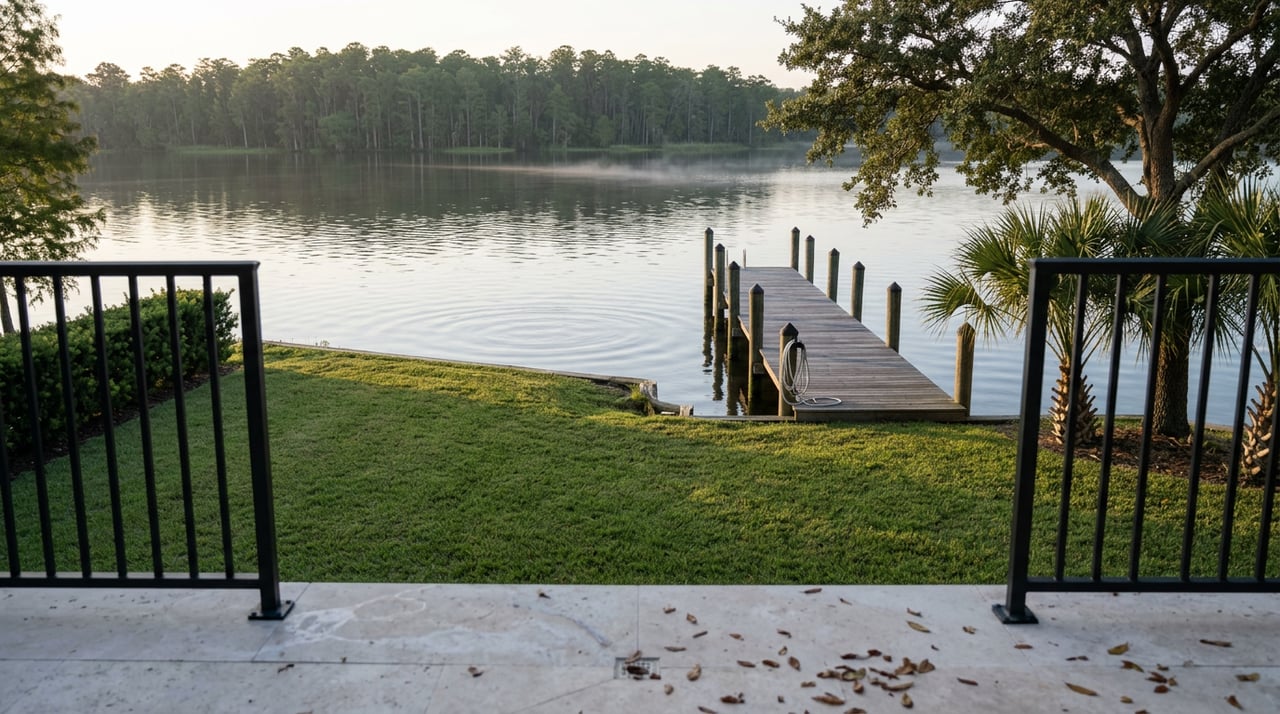
Pull up to the northwest shore of Bird Island on any warm Saturday and you will still see the same scene that has defined the Butler Chain of Lakes for generations: pontoons rafted together, a few wake boats idling nearby, kids swimming between them while someone's speaker carries across the water. What has changed is that there is now an actual line in the water. For most of the chain's history, that line existed only as a local saying, "if your ankles are wet, you're fine." Now it is marked by buoys, backed by a county ordinance, and enforced by the Orange County Sheriff's Office. If you live on the Butler Chain and haven't updated your mental map of what is and isn't allowed near the island, this is the piece that catches you up.
From Custom to Code
Bird Island, officially Egret Island, sits at the northeast end of Lake Butler and has been owned by the Audubon Society since it was deeded to the organization by the Chase Company and Frank Chase in 1958. For decades, the rule governing how close boaters could get was entirely informal. Locals passed down the "ankles wet" standard the way you'd pass down a fishing spot: nobody wrote it anywhere, but everybody who grew up on the water knew it. That worked reasonably well when the chain saw a handful of boats on a weekend afternoon. It worked less well as the crowds grew and the complaints piled up.
By 2022, Windermere's Town Council was formally asking Orange County to revisit its Boats and Water Safety Ordinance specifically because of what was happening around the island. County Commissioner Nicole Wilson noted that the update had been "researched and vetted for over a year," with input from the Town of Windermere, the Butler Chain of Lakes Advisory Board, the Florida Fish and Wildlife Conservation Commission, the Audubon Society, and the Orange County Sheriff's Office. A resident who had lived near the Windermere boat ramp for 34 years wrote to commissioners describing an area that used to be quiet and had progressively changed as parties brought noise, drinking, and littering closer to her home. "I applaud and totally support the proposed ordinance to establish a no-boat zone around this area," she told commissioners.
The result is what the Town of Windermere now describes on its own Bird Island page: a Swim Area and Vessel Exclusion zone, marked by buoys, positioned 80 feet off the northwest shore. Inside that zone, no vessel, motorized or not, can enter, moor, or tie off to the markers. Swimmers can still be in the water. Boats simply can no longer crowd the same square footage. Anyone with a question about the zone's boundaries is directed to contact the county at [email protected], and the Sheriff's Office handles enforcement on the water itself.
Where the Line Actually Sits
The practical upshot for anyone boating out to Bird Island this season is straightforward, even if it takes a Saturday or two to internalize. You can anchor and swim well outside the 80-foot buffer, same as always. What you can no longer do is nose a pontoon or jet ski directly up to the shoreline, which used to be common when the crowd got thick and everyone wanted the closest spot. The buoys make that judgment call for you now instead of leaving it to whoever's boat gets there first.
It is worth saying plainly: stepping onto the island itself was never allowed, ordinance or not. Bird Island remains an active bird sanctuary, and the shallow sandbar reputation that made it the chain's unofficial social headquarters has always existed alongside its actual purpose as protected habitat. The new zone formalizes distance from the shoreline. It does not change the underlying fact that the island belongs to the birds.
The Three Doors Onto Nearly 5,000 Acres of Water
None of this matters much if you cannot get a boat onto the chain in the first place, and access has always been the real bottleneck on the Butler Chain. Public entry points number exactly three.
| Access Point | Location | Cost | Notes |
|---|---|---|---|
| R.D. Keene Park | 10900 Chase Road, on Lake Isleworth | $5 launch fee | Parking capped at 49 vehicles and trailers; arrive early on weekends |
| Lake Down Ramp | Conroy-Windermere Road | Free | Single-lane ramp, hours vary seasonally |
| Windermere Town Ramp | Off Main Street, direct onto Lake Butler | Free | Maintained by the town; one of the few non-resident entry points onto Lake Butler itself |
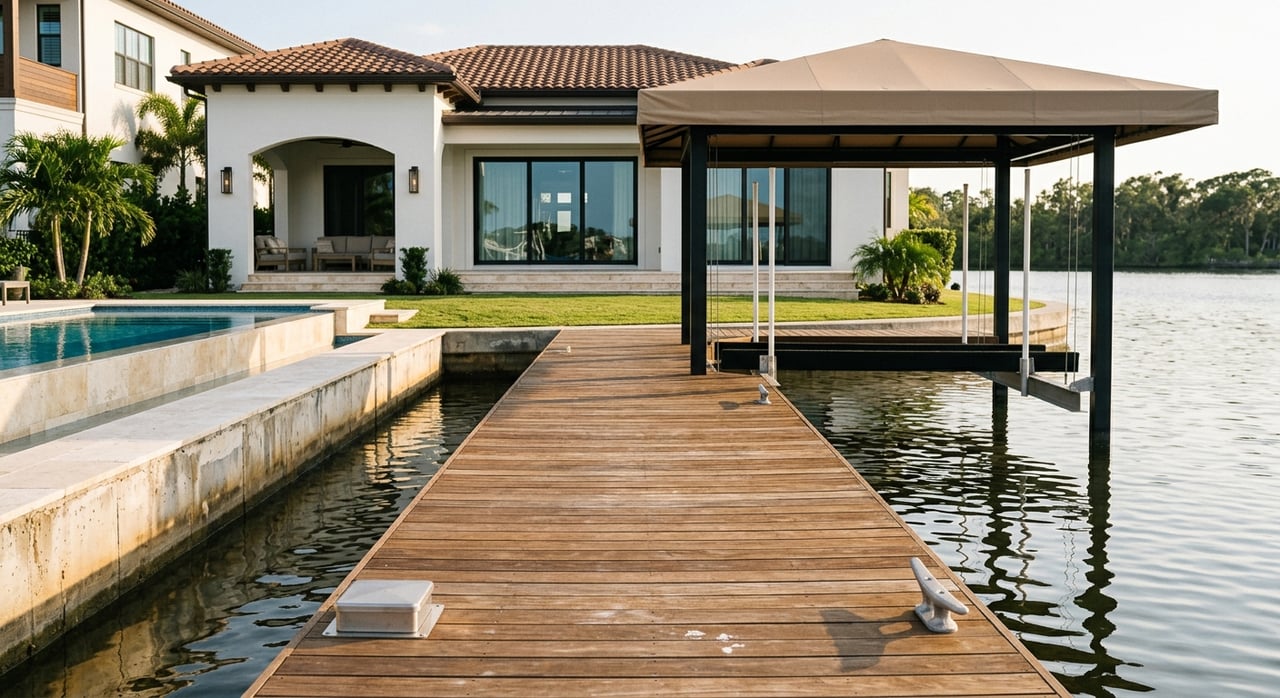
Everything else on the chain's roughly 4,927 acres of water runs through private docks and community facilities. That scarcity is precisely why residents treat these three ramps the way city dwellers treat parking spots near a stadium. Keene Park's 49-trailer cap fills fast on a clear weekend, and the Windermere ramp's limited parking means a 9 a.m. arrival can beat an 11 a.m. one by a wide margin.
What the Chain Looked Like Before the Crowds
Longtime Windermere resident John Nabers, recalling his childhood on Lake Butler in an April 2026 interview with the Orange Observer, described a very different island. "Bird Island was always teeming with birds," he said, adding that during nesting season the trees were so full that birds had to nest on the ground.
That contrast is worth sitting with. The island's name was not a marketing flourish. It described an actual, dense nesting habitat that existed long before pontoon rafts and Bluetooth speakers became the dominant weekend feature. The new vessel exclusion zone is not really a new idea so much as an attempt to recover some version of what the island was originally supposed to be, using a legal boundary where an honor system used to suffice.
If the Crowd Isn't Your Scene
Bird Island is the chain's most famous gathering spot, but it is not the only one, and residents who find the Saturday scene there a bit much have real alternatives within the same connected system of lakes.
- Lake Tibet, the second-largest lake in the chain at 1,198 acres, draws serious water skiers looking for open water away from the sandbar crowds.
- Lake Louise, a narrow pass-through connecting Lake Butler to Lake Tibet, is shaped almost perfectly for skiers cutting end to end, with far less boat traffic than the main lake.
- Lake Down, the chain's northernmost major lake at 872 acres, offers wide open water and quieter mornings, better suited to fishing than to socializing.
- Wauseon Bay, the connector between Lake Down and Lake Butler, passes directly beneath Windermere's Main Street, one of the more memorable low-bridge moments on the entire chain and a reminder that this is a working town waterway, not a resort lagoon.
Moving between these lakes means passing through no-wake canals, and that etiquette is not optional. The narrow channels connecting the chain's lakes are strictly idle-speed zones, and the passage between Lake Tibet and Lake Butler in particular requires patience through the slow stretch before opening back up to speed on the other side.
Who Is Actually Watching the Water
The chain's day-to-day governance runs through the Windermere Water and Navigation Control District, created by the Florida Legislature in 1963 and known today as the Butler Chain of Lakes Advisory Board. Its five members serve four-year terms and are responsible for setting dock construction standards, overseeing canal maintenance, and coordinating enforcement across the system. On the water, that enforcement falls to the Butler Patrol, a unit established in 1988 that draws officers from the Florida Fish and Wildlife Conservation Commission, Florida Park Patrol, and Orange County Sheriff's Office to handle everything from routine boating violations to search and rescue.
This is the layer most visitors never think about and most residents eventually learn by necessity. The chain looks like open recreation, and mostly it is, but it operates under an actual governance structure that has existed for over sixty years and that occasionally updates its rules when enough residents raise enough concerns for long enough. The Bird Island ordinance is the most visible recent example. It will not be the last.
Planning Your Next Saturday
None of this changes what makes the Butler Chain worth living on. The water is still spring-fed and clear in a way most Florida lakes are not. Bird Island is still the social center of the system on a nice weekend, and the sandbar culture that built up around it over decades is not going anywhere. What has changed is that the informal courtesy locals used to rely on now has an 80-foot buffer and a sheriff's patrol behind it, and knowing exactly where that line sits will save you an awkward conversation with a deputy the next time you head out with the boat.
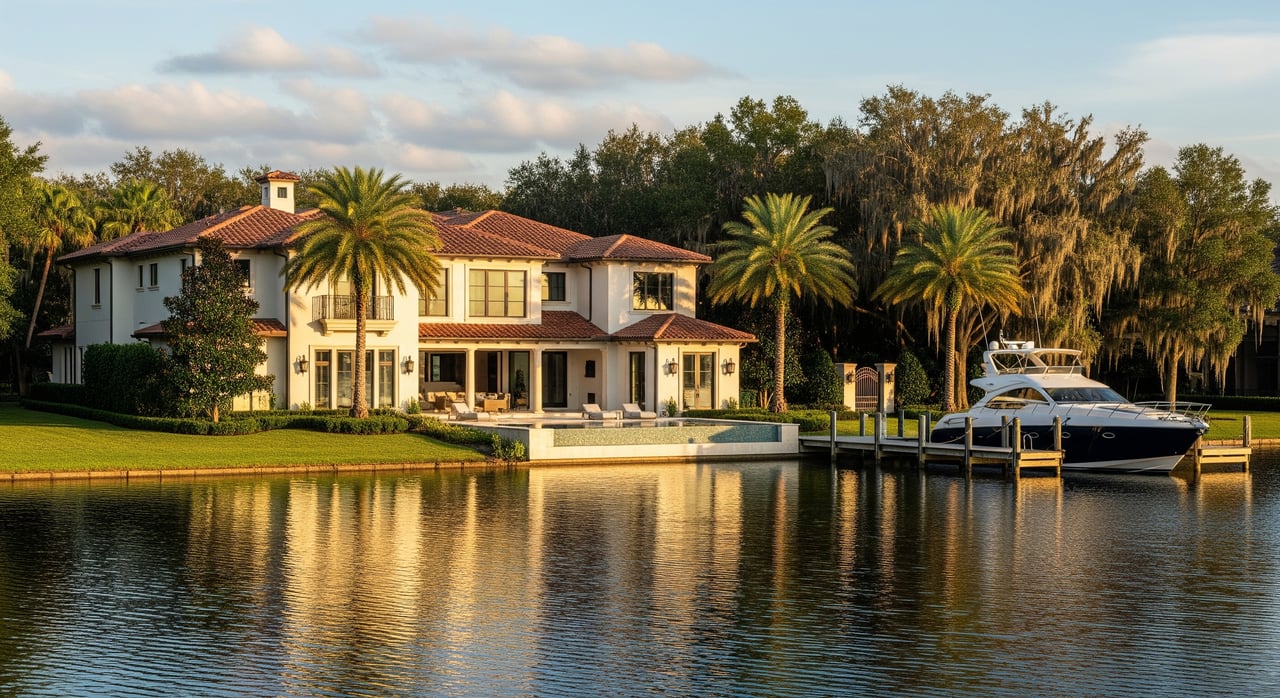
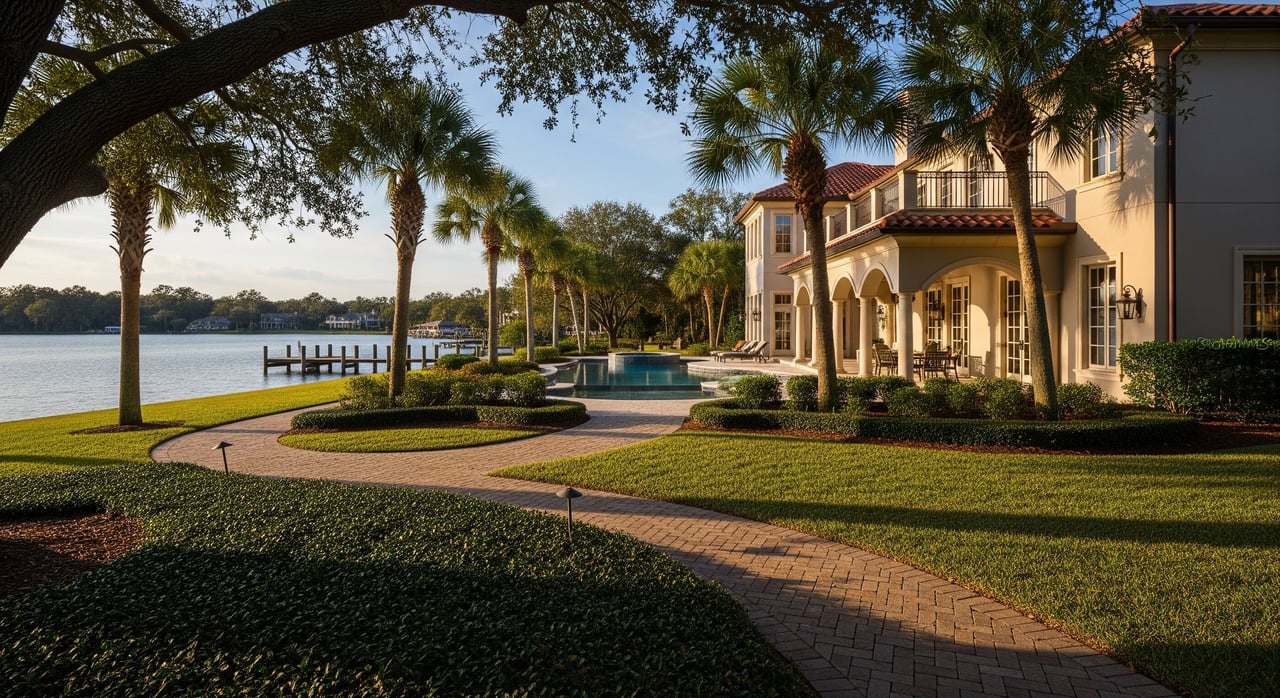
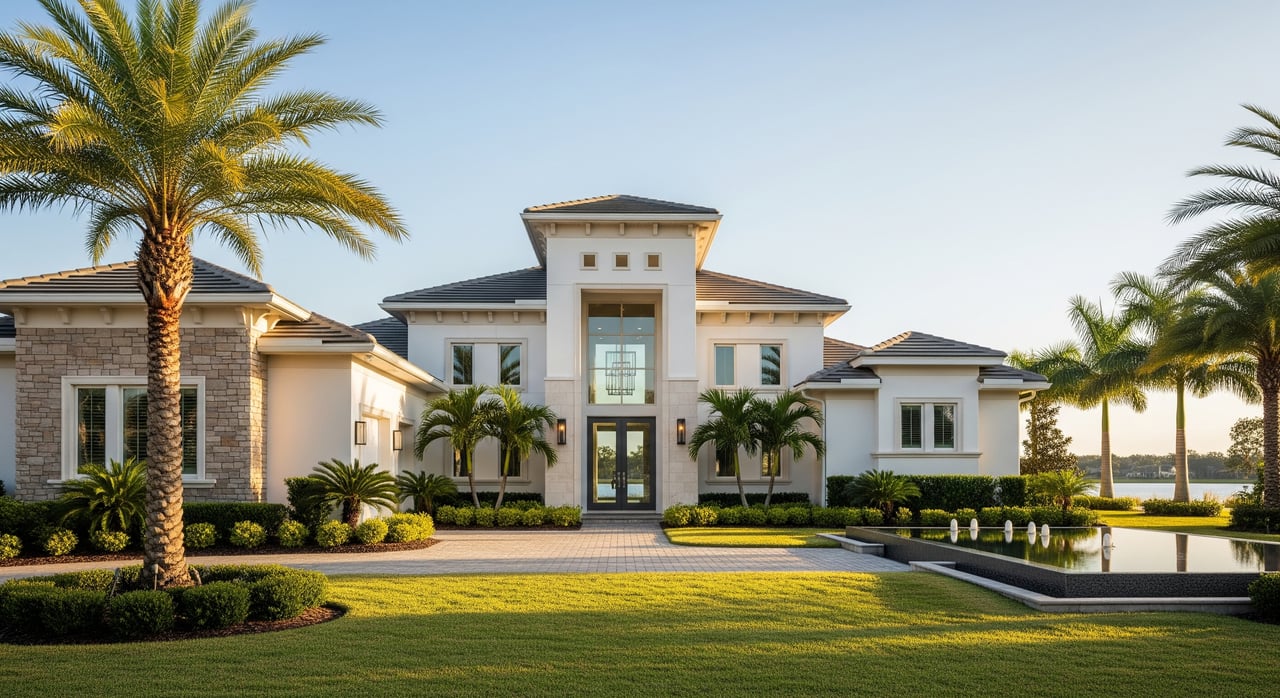
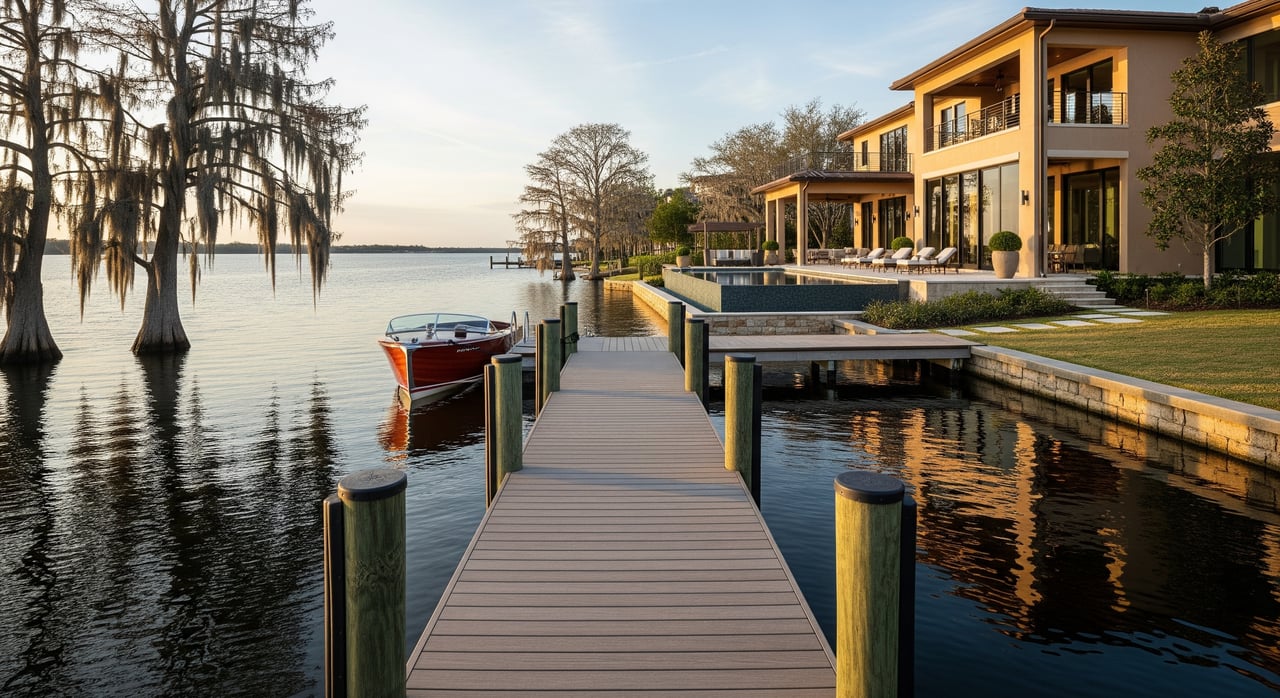
If you are weighing a move to the Butler Chain, or already live here and are curious what a property with true deeded access to this system looks like on paper, the team at The Hazera Team works this exact stretch of Windermere waterfront regularly. Request a private consultation to talk through what's actually available on the chain right now.
This article is general information, not legal, tax or financial advice. Consult a qualified professional about your situation.